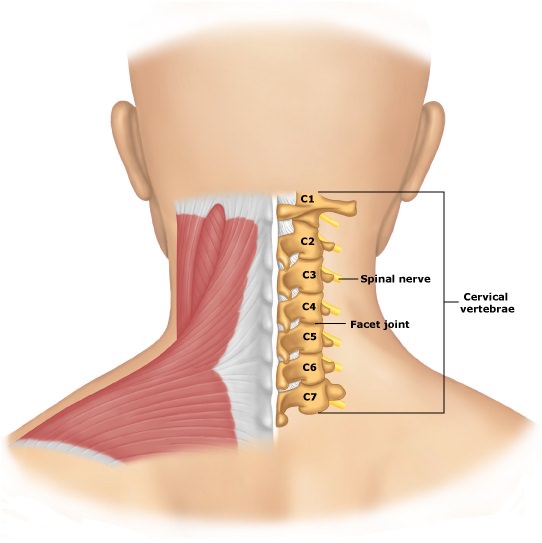
Neck PainNeck pain is very common with most people having one or more episodes of shoulder and neck pain at some point in their life. The pain usually resolves within a few days or weeks, and serious or permanent damage is rare. Disc problems and trapped nerves are very uncommon as the cause of typical everyday neck pain. Low back pain follows a similar course. While most neck pain comes from the neck structures themselves, sometimes it can be referred from the shoulder, thoracic or other areas. The situation is similar to that with back pain, whether it be lower back pain, middle back pain or upper back pain. Physiotherapy has an important part to play in the management of your neck pain. See your physio for assessment, treatment and an exercise programme. Manipulation, acupuncture and other treatments are available to physiotherapists to give neck pain relief. Further resources on neck pain can be found at Arthritis Research UK with a symptom checker at Familydoctor.org. Neck Pain CausesThe cause of cervical spine neck pain is often difficult to pin down in terms of what exactly is responsible for the pain (it's the same with back pain causes) but the general patterns are well known. Sudden onset of neck pain can be caused by twisting the neck quickly to look round or if an awkward position and people may wake with neck pain if they have slept awkwardly. This can be referred to as torticollis neck pain and there are many potential reasons for pain and the head to be kept in an odd position, not just joint strain. More general neck pain reasons can be holding the head in a stressful position for too long and causing fatigue in the neck muscles, such as by sitting too long at a desk or a computer or watching TV in a slumped posture. Whiplash injuries, mostly from rear shunt vehicle accidents, are a common cause of neck pain and headaches and pain in surrounding areas. Spondylosis, the time related degenerative changes which occur in the neck joints more quickly in some people than others, is also a significant cause of neck pain in middle aged and older people. Disc prolapses, often called slipped discs or ruptured discs, are less common than normal neck pain but can give severe neck pain, shoulder pain and arm pain (nerve root pain is like sciatica in the arm), often referred to as a shoulder pain trapped nerve problem. Osteoporotic fractures can cause pain and also the gradual bend of the lower neck and upper thorax area (a kyphosis) but can lead to neck pain secondary to poor bony posture. Serious conditions affecting the neck can be trauma such as a fall, infections, tumours and spinal stenosis (spinal canal narrowing). These need immediate medical attention for diagnosis and treatment. Kidney pain is not typically related to neck pain syndromes. Pain conditions such as fibromyalgia may have shoulder pain and neck pain as part of a wider pain picture. Right shoulder pain or left shoulder pain often present as part of a neck pain problem due to the joints or disc problems occurring more severely on one side or another.
Understanding Your NeckYour spine is a very strong part of your body and consists of the solid, bony vertebrae stacked up on top of each other in a jointed column. Strong and flexible discs join the vertebrae together into a powerful and mobile structure. Ligaments bind the bones together safely and the neck has large, strong muscles which move and stabilize it. A neck strain is the commonest cause of neck pain which has a sudden onset. This is not serious and will settle within a short time. Even though it is often not clear in an individual’s case, most neck pain is thought to arise from soft tissue structures such as the facet joints, ligaments and muscles. Your neck is suffering from a temporary hiccup in its ability. With your neck pain you can get other symptoms, such as arm pain, shoulder pain, chest pain, headache and pins and needles in the shoulder or arm. Many people think these problems are due to a trapped nerve but this diagnosis is uncommon and the symptoms are quite different. These extra symptoms usually settle as your neck pain does. Back pain symptoms are similar and the same approach holds. The exact diagnosis of your neck pain is not very important unless it is very severe or you are suffering from many other problems too. How you manage your neck pain is important and can make a difference to how quickly you recover and go back to normal. Because an injury or the changes which occur in the spine do not always occur symmetrically it is possible to have back of neck pain or side of neck pain such as left neck pain or right neck pain.
Neck Pain RemediesIt’s as important to do the right things straight away in the early stages of your neck pain as it is in back pain treatment. The natural thing to do is rest but if you rest for more than a day or two it has been shown not to be helpful for neck pain relief. Resting too much may prolong your pain and increases the risk of longer term disability. Overall, movement is a good thing for your neck. Neck exercises for neck pain move your neck naturally, sending normal messages into the nervous system which help cut the pain. Exercise moves the muscles and joints, preventing a stiff neck and easing the uncomfortable structures. Don’t wear a collar as this can prevent your neck moving and may increase disability. Get moving as soon as you can and get back to your normal activities ASAP. You’ll feel better if you get going early and get on with your life despite the pain.
Relief for Neck PainEven thought your neck may be painful, that’s not a good reason to stop doing everything and resting. You can do sensible things to help:
The initial reduction of activity should only last a few days then you can steadily resume normal activity, without pushing straight back to normal levels. Heavy activities may take several weeks to return and a physio can help you with deciding when to progress and how fast to go forward at each stage.
Pain Killing Medication
Do I Need To See A Doctor?Most neck pain is not serious and settles with routine management and advice. If your neck pain is very severe and disabling, or if it gets worse over time rather than better, you should seek a doctor’s advice. A doctor will be able to tell if you have uncomplicated neck pain and exclude serious causes for your condition. He or she will examine you and it is unlikely you will need an x-ray or a scan as these are not indicated for uncomplicated neck pain. If you have any of these rare symptoms you should however consult a doctor right away:
Neck Pain Prevention
Shoulder PainShoulder muscle pain may include shoulder blade pain and upper back pain, making it difficult to decide if the neck structures are involved. Trigger points have been suggested as sources of pain in the bodies of muscles and which can be treated by physiotherapy to give shoulder pain relief. Frozen shoulder is another shoulder syndrome and can be the source of very severe pain although the cause is not understood. Physiotherapy may contribute to providing frozen shoulder pain relief, although injections, manipulation and operation may be needed in some cases. In shoulder pain, cancer is a very uncommon cause and there may be signs of a serious underlying illness on assessment and examination. Medical advice should be sought immediately if there is any suspicion of a serious cause to the shoulder pain.
Back PainBack pain diagnosis has the same problems as with neck pain in that the exact cause of the symptoms is often not clear, although physiotherapy potential to provide some back pain relief by advice, exerices, fitness work and specific treatments. A back pain blog can give a valuable first hand view of back pain and the many symptoms, approaches and treatments available. Information-back pain summarises many points about the self management of back pain. |